An educational guide to animal shelters, rescue organizations, adoptable pets, responsible advocacy, and the Green Muse Adoptables Heart Color System.
Animal advocacy can feel overwhelming, especially when so much of what we see online focuses on emergencies, heartbreaking stories, and urgent requests for help.
Behind those posts, however, are people caring for animals, organizations working within different limitations, and processes that are not always visible to the public.
At Green Muse Adoptables, we believe understanding those processes is an important part of helping animals responsibly.
Our Advocacy Classroom was created to make animal welfare information easier to understand. Whether you are considering adoption, interested in fostering, sharing an animal's profile, or simply trying to learn how shelters and rescues operate, this guide offers a place to begin.
We want to help people make informed decisions without relying on fear, assumptions, or emotional pressure.
Meaningful animal advocacy begins with understanding the animals, the people caring for them, and the systems surrounding their lives.
Shelter 101: Understanding Animal Shelters and Overcrowding
Animal shelters provide temporary care and services for animals who may be lost, surrendered, abandoned, transferred, or otherwise in need of assistance.
Not every shelter operates the same way.
Municipal shelters may have legal responsibilities for receiving stray animals within their jurisdictions. Private nonprofit shelters may operate under different admission policies, resources, and capacity limitations.
Some organizations provide open admission for animals covered by their service obligations, while others limit intake based on available space, staffing, or the types of animals they can care for.
Understanding these differences helps us avoid making broad assumptions about individual facilities.
Why Do Animal Shelters Become Overcrowded?
Shelter capacity depends on the relationship between incoming animals, animals leaving the shelter, and the resources available to care for them.
Animals may enter shelters through stray intake, owner surrender, transfers, or other circumstances.
They may leave through adoption, reunification with their families, transfer to another organization, or other documented outcomes.
When incoming animals exceed the number leaving, and available housing and care resources cannot keep pace, overcrowding can develop.
But the number of occupied kennels is only part of the picture.
Shelters also need sufficient staff, medical resources, appropriate housing, cleaning capacity, and time to provide daily care.
A facility may face serious operational pressure even when a small number of physical kennels remain empty.
What Contributes to Shelter Capacity Challenges?
Several circumstances can influence the number of animals entering shelters and the length of time they remain there.
Housing restrictions, financial hardship, limited access to affordable veterinary services, challenges finding pet-friendly housing, and gaps in community support may all affect whether families can keep their animals.
The effects differ by location, season, shelter policy, and the resources available in a particular community.
It is important not to assume that every shelter faces the same conditions or that overcrowding has one simple cause.
What Does It Mean When a Shelter Says It Is Full?
A shelter may be describing physical kennel capacity, staffing limitations, medical isolation needs, or an inability to provide appropriate housing for additional animals.
The statement does not necessarily mean every animal is facing an immediate deadline.
If an organization reports a specific risk or deadline, responsible advocates should identify the source, date, and circumstances rather than interpreting general capacity pressure as an individual emergency.
Understanding overcrowding should lead us toward informed support, not automatic panic.
Rescue 101: How Animal Rescue Organizations Work
Animal rescue organizations help animals through a variety of programs, often including foster care, veterinary coordination, adoption placement, and transfers from shelters.
Some rescues operate physical facilities. Others rely primarily on networks of foster homes.
Their missions may focus on particular species, breeds, medical needs, geographic areas, or types of placement.
A rescue may accept an animal from a shelter when it has the resources and appropriate placement available, but accepting an animal creates ongoing responsibilities.
Those responsibilities can include veterinary expenses, housing, transportation, daily care, and finding a suitable permanent home.
The Importance of Foster Homes
Foster caregivers provide temporary homes for animals under the direction of a shelter or rescue program.
Depending on the animal's circumstances, fostering may provide a quieter environment, recovery space, opportunities for observation, or a temporary placement while adoption arrangements are made.
Fostering can also help organizations learn more about an animal's behavior and daily needs outside a shelter environment.
However, foster care is not automatically suitable for every animal.
The placement must account for the animal's medical and behavioral needs, the caregiver's experience, and the organization's ability to provide support.
Why Do Rescues Have Adoption Requirements?
Rescue organizations may use applications, interviews, reference checks, meetings, or other procedures to assess whether a placement is appropriate.
Requirements vary between organizations and should be considered in the context of the animal's needs.
A thoughtful adoption process aims to help prospective adopters understand the commitment involved and identify whether the home can provide suitable care.
No application system can guarantee a successful adoption. Clear communication, realistic expectations, and ongoing support can be important parts of responsible placement.
Shelters and Rescues Are Not Opposing Systems
Shelters and rescues may work together through transfers, foster partnerships, medical coordination, and adoption support.
Neither type of organization should automatically be treated as more compassionate or responsible based solely on its name or operating model.
The quality of animal care depends on actual practices, resources, oversight, and individual circumstances.
Respectful advocacy recognizes that both shelters and rescues can contribute to animal welfare.
Adoptables 101: What Does It Mean When an Animal Is Available?
An adoptable animal is one whose responsible organization has determined that adoption may be pursued under its current policies and procedures.
An animal's listing may include their name, identification number, estimated age, sex, size, breed description, photographs, and available care information.
Some profiles include detailed behavioral observations and medical histories. Others provide only basic information.
A public listing should be treated as an introduction to an animal, not a complete assessment.
Understanding Common Adoption Statuses
Available: The organization currently lists the animal as eligible for adoption inquiries or applications.
On Hold or Adoption Pending: A placement process or temporary restriction may be underway. The animal has not necessarily been adopted.
Adopted: The responsible organization has confirmed an adoption.
Transferred: The animal has moved into another organization's care. Transfer does not necessarily mean the animal has found a permanent home.
Outcome Unknown: Reliable information about the animal's current situation or outcome is unavailable.
These descriptions are general explanations. Shelters and rescues may use different terminology or internal classifications.
Why Animal Availability Can Change Quickly
Adoption applications, reunifications, medical developments, transfers, and other decisions can change an animal's status.
A profile that was accurate yesterday may no longer reflect the animal's circumstances today.
For this reason, a social media post should never be treated as a real-time adoption record.
Before traveling, arranging transportation, making financial commitments, or preparing to adopt, contact the responsible organization to confirm the animal's current status and next steps.
What If an Animal Disappears From a Shelter Website?
A missing profile does not establish what happened to the animal.
The listing may have changed because of adoption, transfer, administrative updates, temporary restrictions, or other circumstances.
Without reliable confirmation, it is inappropriate to assume a particular outcome.
This is especially important when people are emotionally invested in an animal's story.
We can care deeply while acknowledging that some information remains unknown.
Ethical Advocacy: How to Share Animals Responsibly
Sharing an animal's story can help introduce them to potential adopters, foster caregivers, and supporters.
But the way we communicate matters.
An inaccurate post can create confusion about availability, care needs, deadlines, or the organization responsible for the animal.
Responsible advocacy begins with checking the information before sharing it.
Start With the Original Source
Whenever possible, locate the animal's official shelter or rescue profile.
Look for the identification number, responsible organization, current listing, and relevant adoption information.
If a post has been shared repeatedly, remember that the original details may have changed.
A photograph alone is not enough to confirm an animal's identity or availability.
Avoid Inventing Personality or History
A photograph may suggest something about an animal, but it cannot establish their temperament, medical history, or compatibility with a particular home.
Descriptions such as good with children, house-trained, gentle with cats, or perfect for first-time adopters should be supported by reliable information.
When those details are unavailable, prospective adopters should ask the organization directly.
Communicate Urgency With Evidence
Urgency should be connected to documented circumstances.
These may include a confirmed deadline, specific medical needs, a time-sensitive placement request, or an official notice from the responsible organization.
General shelter overcrowding does not automatically establish an immediate deadline for every animal housed there.
Avoid phrases that pressure readers without providing verifiable context.
A clear explanation of what an animal needs is more useful than an unsupported warning.
Respect the People Providing Care
Shelter employees, rescue volunteers, foster caregivers, and veterinary teams may be handling substantial responsibilities.
Their ability to answer public inquiries can vary.
A delayed response should not automatically be interpreted as indifference, negligence, or an attempt to hide information.
At the same time, advocates should not assume an animal's outcome is positive simply because no concerning information has been received.
When facts are missing, the responsible response is to acknowledge the uncertainty.
The Green Muse Adoptables Heart Color System
The Heart Color System is a visual organization tool used by Green Muse Adoptables to help readers recognize documented animal characteristics and placement considerations.
The hearts make our features easier to navigate while allowing each animal to remain the focus.
They are not medical assessments, adoption guarantees, or rankings of which animals deserve attention.
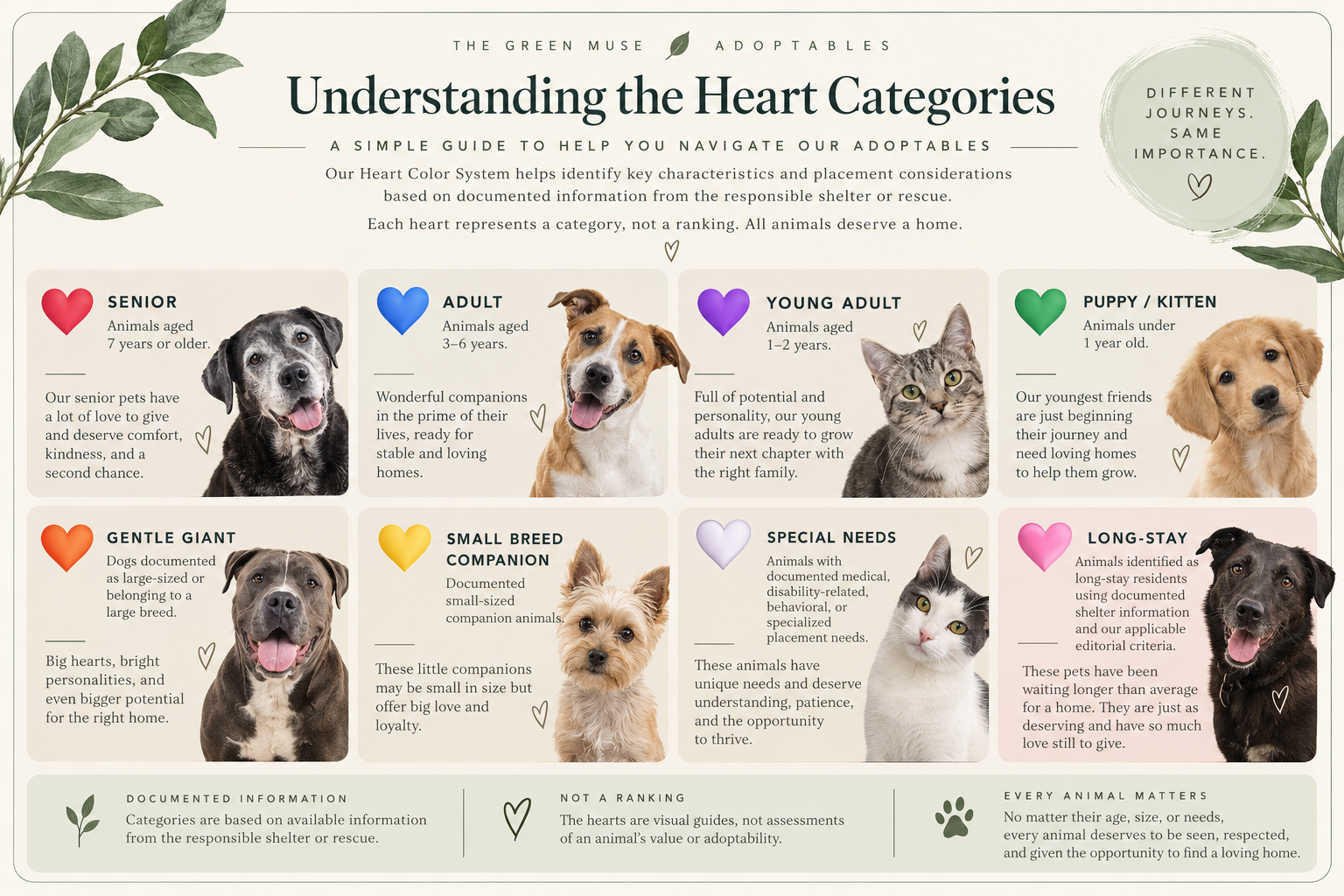
How We Apply the Categories
Age-based categories depend on the age reported by the responsible organization.
Because some animal ages are estimates, a heart should not be interpreted as proof of an exact birth date.
Size-based categories require supporting information. We do not assign them solely because an animal appears large or small in a photograph.
The Special Needs category requires documented information about relevant care or placement requirements.
We do not assume that an animal has special needs simply because they are older, have spent considerable time in a shelter, or appear physically different.
For long-stay animals, the classification must be supported by the available shelter history or other reliable documentation.
A long stay is not evidence that an animal is difficult, unwanted, or unsuitable for adoption.
What the Hearts Do Not Tell You
A heart cannot tell you whether an animal is compatible with your household, how they behave in different environments, or whether you can meet their individual needs.
Those questions require more detailed information from the responsible organization.
The Heart Color System helps readers navigate our features. It does not replace an adoption conversation.
Finding Animals and Following Their Updates
Green Muse Adoptables uses different platforms for discovery, individual features, and educational information.
Understanding those roles can help readers find the most relevant information without relying on outdated posts.
Instagram: Individual Features and Updates
Our Green Muse Adoptables Instagram account serves as a central space for individual animal features and publicly communicated status information.
We aim to keep the feed focused on the animals themselves.
When reliable new information becomes available, we may update the original feature or its associated status information.
Story Highlights provide additional guidance and organization.
TikTok: Helping More People Discover Animals
TikTok allows animal features to reach people beyond our existing community.
However, videos can continue circulating long after an animal's circumstances have changed.
For that reason, viewers should not rely on an older TikTok video as confirmation of current availability.
Our TikTok account directs people toward Instagram and the original shelter or rescue for further information.
Our Website: Education and Resources
The Green Muse website provides longer educational articles, advocacy resources, and explanations of the systems behind animal welfare.
These resources are designed to remain useful beyond a single social media post.
They also help readers understand the responsibilities and limitations of independent animal advocacy.
Our Public Tracking Records
Green Muse Adoptables maintains organized tracking sheets to help document featured animals and available status information.
Public-facing records can help readers understand which cases have confirmed updates and which remain unresolved.
These sheets are independently maintained advocacy resources.
They are not official shelter databases or real-time records.
The responsible shelter or rescue remains the authoritative source for current information.
How You Can Help Animals Responsibly
There is no single correct way to support animal welfare.
The most useful action depends on your circumstances, available resources, and the needs of the animal or organization.
Adoption
If you are considering adoption, begin by reviewing the official profile and contacting the responsible organization.
Ask about medical history, behavior, care requirements, adoption procedures, and any information needed to evaluate whether the placement is appropriate.
Adoption is a long-term commitment. Taking time to make an informed decision is part of responsible care.
Fostering
Fostering can provide temporary care for animals who need placement outside a shelter or rescue facility.
Before applying, ask about the expected duration, veterinary responsibilities, supplies, emergency procedures, and support available from the organization.
Volunteering
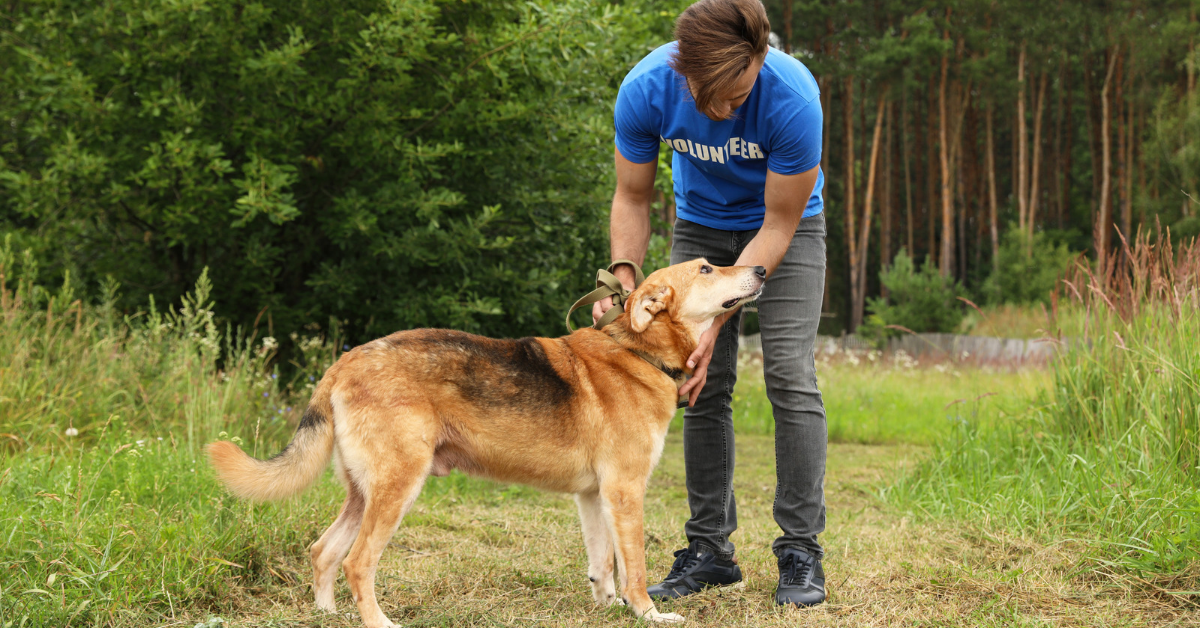
Organizations may need help with animal care, transportation, administrative tasks, photography, outreach, or other activities.
Contact the organization to learn which roles are available and what training or requirements apply.
Sharing Verified Profiles
If adoption or fostering is not possible, sharing accurate information may still help an animal reach someone who can assist.
Whenever possible, include the original profile and identification number.
Avoid adding unverified claims or circulating outdated deadlines.
Supporting Community Pet Retention
Helping families keep their animals can also be part of animal welfare.
Depending on local resources, this may involve sharing information about pet food assistance, affordable veterinary care, accessible spay/neuter services, or pet-friendly housing resources.
Preventing an avoidable surrender can be meaningful support for both animals and their families.
Understanding Green Muse Adoptables' Role
Green Muse Adoptables is an independent animal advocacy initiative of The Green Muse.
We help make adoptable animals visible through researched features, organized information, and responsible communication.
We are not a shelter, rescue organization, adoption agency, or veterinary provider.
We do not house animals, approve adoption applications, reserve pets, arrange placements, or control their outcomes.
Our involvement with volunteer programs and rescue-related initiatives does not mean we have access to every organization's internal records.
We work with the information available to us, and we recognize that some questions may remain unanswered.
For a detailed explanation of our verification procedures, public tracking system, shelter communications, status updates, and editorial responsibilities, read our companion guide:
Green Muse Adoptables: Ethical Storytelling, Transparency & the Work Behind Every Animal We Share
It explains what happens behind our animal features and why transparency includes being open about the information we cannot confirm.
Frequently Asked Questions
-
No. Adoptions are handled by the responsible shelter or rescue. We provide visibility and help readers locate the original source.
-
Not necessarily. Availability can change after publication. Always verify directly before making adoption arrangements.
-
No. The hearts identify documented categories, not individual compatibility or adoption readiness.
-
Shelter records may change, public listings may disappear, or an organization may not provide an update. Without reliable confirmation, we cannot establish a particular outcome.
-
You may be able to foster, volunteer, share verified profiles, support pet-retention resources, or assist organizations through their established programs.
A More Informed Way to Care
Animal advocacy does not require everyone to respond to every story or make promises they cannot keep.
It begins with understanding the circumstances, respecting the people involved, and recognizing what kind of help is genuinely appropriate.
Sometimes that means opening your home.
Sometimes it means helping someone find a reliable resource, sharing an accurate profile, or learning more before making a decision.
At Green Muse Adoptables, we want education to make compassion more practical.
When people understand how shelters and rescues work, what adoption information means, and why accurate communication matters, they are better prepared to support animals responsibly.
The animal remains at the center of that work.
And every decision should begin with their wellbeing.
Important Information About Animal Listings
Green Muse Adoptables is an independent advocacy initiative and does not control the care, availability, placement, or outcomes of featured animals.
Information is based on sources available at the time of review and may change without notice. Our social media posts and public tracking records are not official or real-time shelter databases.
A removed listing does not confirm adoption or any other outcome. When reliable confirmation is unavailable, we identify the status as unknown rather than making assumptions.
Adoption and foster inquiries should be directed to the responsible shelter or rescue. Readers should confirm current information directly before making arrangements.
Looking to Adopt Responsibly?
Sharing adoptable animals online is one of the simplest ways to reduce shelter overcrowding. Even one share can increase visibility for a dog or cat who might otherwise be overlooked.

If you’d like to meet the pets we’re currently helping amplify, visit our Green Muse Adoptables hub — a curated list of publicly posted animals who need visibility right now.
-
At The Green Muse, we believe that conscious living begins with curiosity, compassion, and access to trustworthy information. Through our articles on sustainable living, ethical fashion, mindful consumption, and animal welfare, we aim to make thoughtful choices more accessible without encouraging perfection or unnecessary consumption.
Transparency, editorial independence, and respect for our readers guide how we research, create, and maintain our content.
Editorial Integrity & Research
Our articles combine independent research, credible publications, publicly available information, and thoughtful editorial analysis. We may use digital research tools, trend analysis, and AI-assisted platforms to help gather, organize, and review information.
All content is reviewed before publication, with sources cross-checked where practical. We recognize that research evolves, information can become outdated, and no source or technology is infallible.
Our articles are intended to encourage informed decisions and further exploration, not to present any single lifestyle, product, or approach as the only responsible choice.
Affiliate Links & Brand Partnerships
Some articles contain affiliate links. When readers make qualifying purchases through these links, The Green Muse may earn a commission at no additional cost to them.
Affiliate partnerships help support our independent editorial work. We aim to feature brands, products, and services that are relevant to our content and consistent with our values. Commercial relationships do not guarantee favorable coverage or determine our editorial conclusions.
We encourage readers to consider their individual needs, research products independently, and make purchases thoughtfully.
External Links, Product Availability & Archived Content
Our articles may reference sustainable brands, products, nonprofit organizations, educational resources, and other third-party websites.
As brands evolve, products are discontinued, organizations update their websites, and affiliate programs change, some external links may become outdated, redirect, or stop working altogether.
We review and update content as resources allow, but cannot guarantee the continued availability, accuracy, pricing, or functionality of third-party websites and links. The inclusion of an external resource does not constitute an endorsement of every product, policy, or practice associated with that website.
Older articles remain part of our educational archive and may reflect information available at the time of publication. Readers are encouraged to verify current details directly with the relevant organizations or providers.
Animal Welfare, Rescue Advocacy & Adoptable Pets
Animal welfare is an important part of The Green Muse. Through educational articles, rescue resources, and The Green Muse Adoptables, we help raise awareness of shelter animals, responsible adoption, fostering, and the work of animal welfare organizations.
Our advocacy is independent and primarily volunteer-based. We are not a shelter, rescue organization, veterinary provider, or adoption agency. Unless explicitly stated, featuring an organization or animal does not imply an official affiliation, employment relationship, or financial compensation.
When sharing adoptable animals, we rely on information provided by shelters, rescue organizations, and other authorized sources. We make reasonable efforts to check and update information, but adoption status, location, medical details, and eligibility can change without notice.
All adoption inquiries, applications, and placement decisions must be handled directly by the responsible shelter or rescue organization.
Rescue Resources, Donations & Third-Party Organizations
Links to animal shelters, rescue groups, nonprofit organizations, donation pages, wishlists, and community programs are shared to help readers discover ways to support animal welfare.
The Green Muse does not operate or control these third-party organizations or their websites. We cannot guarantee their current practices, policies, fundraising activities, availability, or outcomes.
Readers should verify donation information, adoption procedures, and organizational details directly before making financial commitments or participating in programs.
Educational Information & Professional Guidance
Content published on The Green Muse is provided for general educational and informational purposes.
Discussions involving sustainability, environmental practices, animal health, shelter operations, adoption requirements, and related subjects should not replace guidance from qualified professionals.
For veterinary, medical, legal, or other specialized matters, readers should consult appropriately qualified professionals and the organizations directly responsible for individual cases.
Images, Creative Assets & Copyright
Images and creative materials featured on The Green Muse may come from licensed image libraries, design platforms, participating brands, photographers, shelters, rescue organizations, and other credited sources.
These may include Pexels, Unsplash, Canva, Getty Images, and materials supplied by organizations featured in our content.
Images are used according to applicable licenses, permissions, or other lawful grounds. Unless otherwise stated, copyright and ownership remain with their respective rights holders. Their appearance on our website does not imply that The Green Muse owns the original works or that the creators endorse our content.
Corrections, Updates & Community Collaboration
We welcome corrections and updated information from readers, brands, shelters, rescue organizations, and community partners.
Although we work to maintain accurate and useful content, information may change after publication. If you notice an outdated resource, broken link, incorrect attribution, or an animal profile requiring an update, please contact us.
Your input helps us maintain a more reliable and respectful educational resource for our community.
Contact: hello@thegreenmuseblog.com
Thank you for reading with curiosity, supporting independent content, and helping us build a more thoughtful relationship with the world around us.










A Note on Information & Community Respect
This article is shared for educational and awareness purposes. While we strive to provide accurate, reliable information, we encourage readers to explore additional sources and conduct their own research, as information and circumstances may change over time. When applicable, please verify current details directly with the shelter, rescue organization, or relevant official source.
We also ask that discussions remain kind, respectful, and constructive. Thoughtful conversations help us build a supportive community where animal welfare remains the priority.
Thank you for being part of a community that cares.

When pet care becomes difficult to afford, finding reliable help can feel overwhelming. Explore veterinary assistance programs, affordable care resources, and practical steps for preparing applications so you can make informed decisions about your pet's needs.